
Mood
Under your mood is a state it can read: how calm or keyed-up you are, how focused, how loaded. It does not judge whether you are happy or sad.
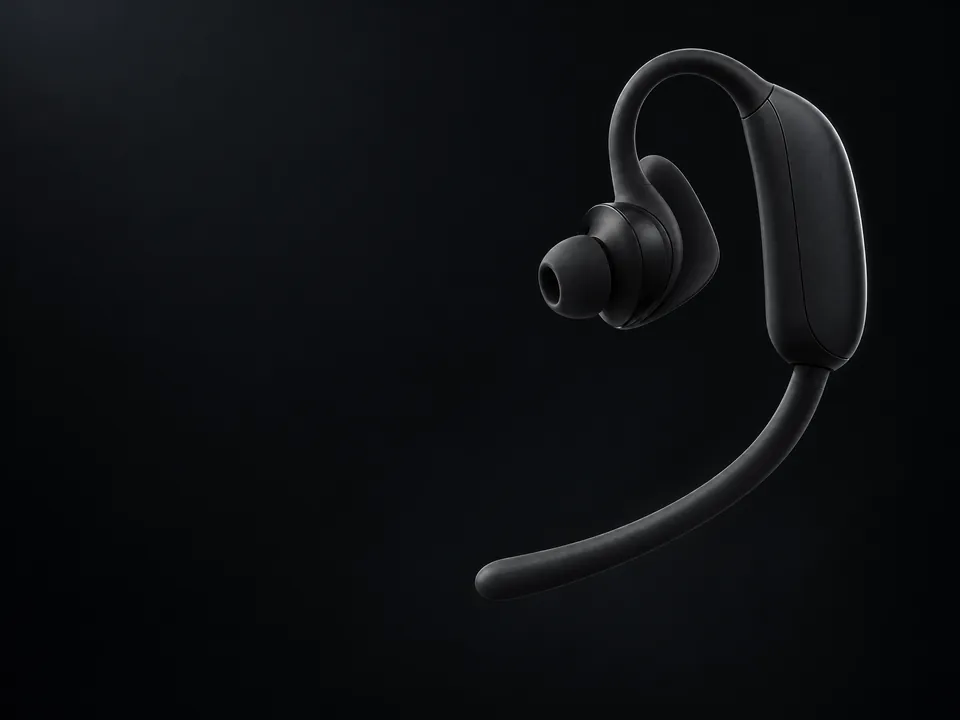
CYMBA C1-S Concept render
Silent speech input from a pair of earbuds and a soft boom along the jaw.
It reads the muscles you move when you mouth a word — not the words you think.

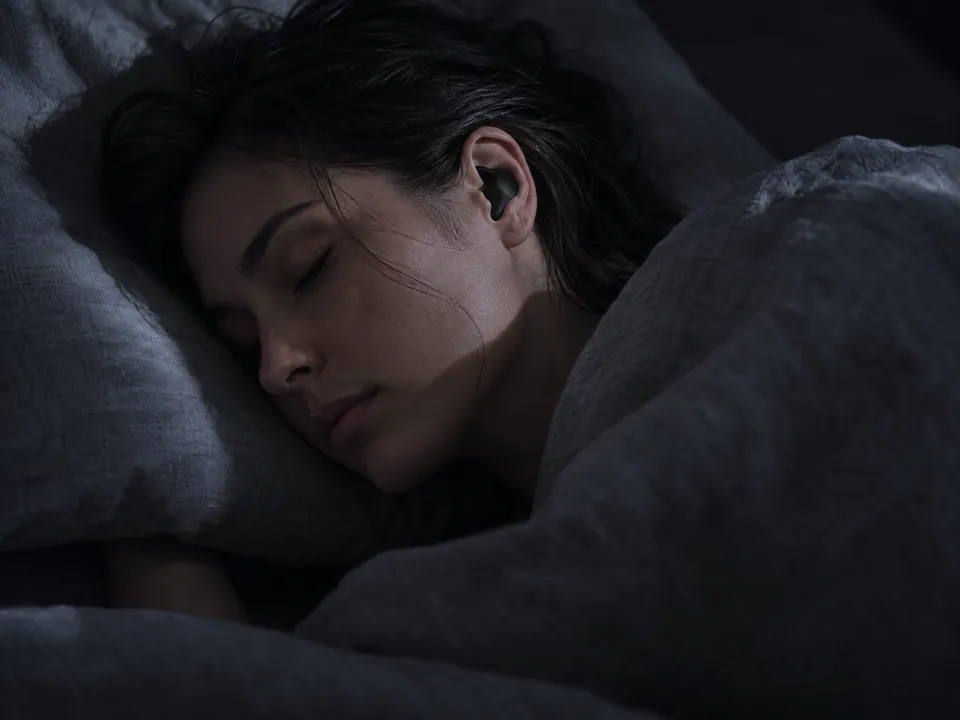
State indications · wellness, not yet validated
Under your mood is a state it can read: how calm or keyed-up you are, how focused, how loaded. It does not judge whether you are happy or sad.
Stress and recovery trends, led by heart rate and HRV from the same electrodes and cross-checked against in-ear EEG.
Overnight in-ear EEG gives a sleep staging indication: wake, REM, light and deep sleep.
The in-ear electrodes in both earbuds record EEG, and the same electrodes pick up the heart's electrical signal. What comes out are wellness indications, not diagnoses — and none of them has been validated on our device yet.
Changes in in-ear alpha and theta rhythms indicate how focused you are, and how loaded.
Led by heart-rate variability and cross-checked against in-ear alpha: a trend for stress, recovery and arousal level.
Overnight in-ear EEG indicates wake, REM, light and deep sleep.
The heart's signal, picked up by the same electrodes, gives resting heart rate and HRV trends.
Silent speech · today and next
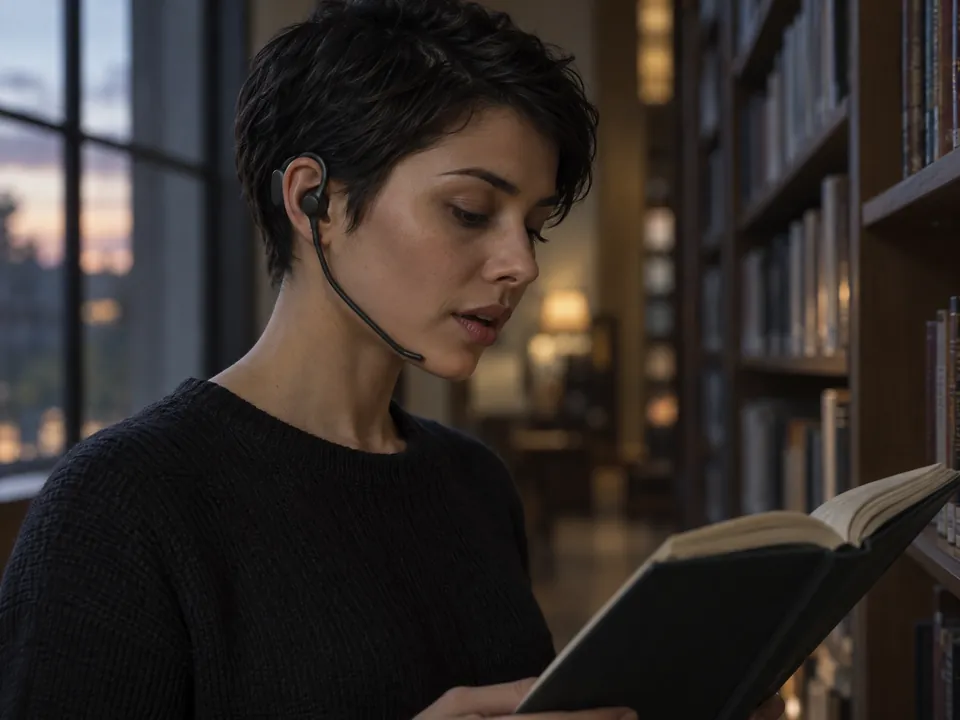
You make the movements of a word without voicing it. The boom reads the muscle activity under your jaw and matches it to a short list of commands. Enrollment is required.
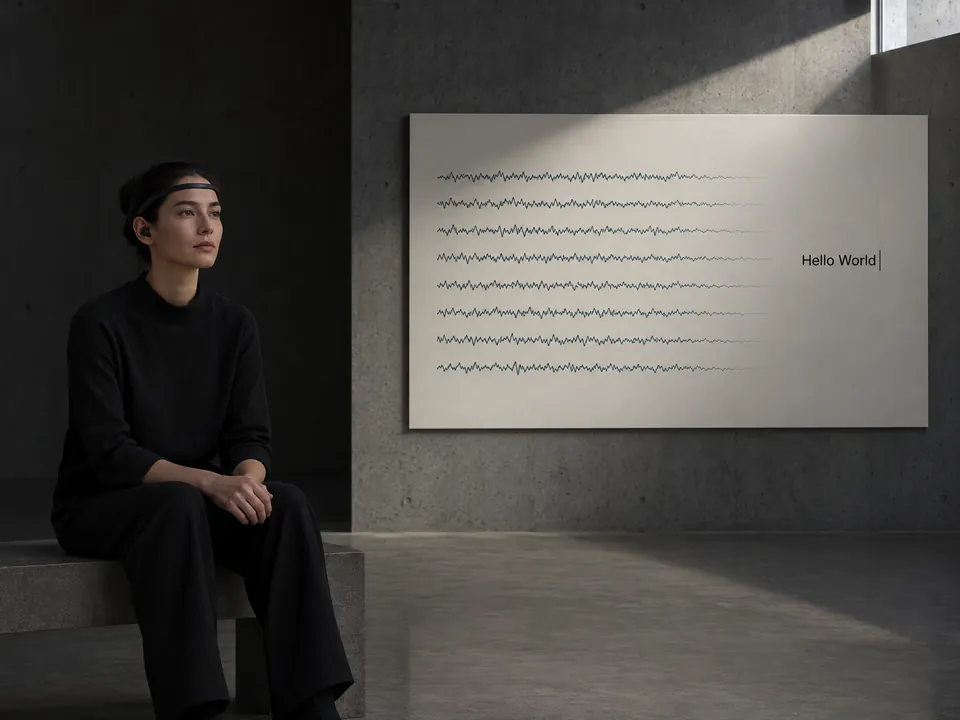
Lips still, words only in your head. From non-invasive EEG, published results so far are close to chance. We are researching it, with no promised date and no promised accuracy.
Large language model · signal to text
A decoder first turns muscle or brain activity into candidate words, each with a probability. A large language model then weighs those candidates against how language really goes, and writes out the most likely text.
Play music
In published silent-speech research, adding a large language model cut open-vocabulary word errors from 28.8% to 12.2%. On C1-S the model works inside your closed set of commands and phrases.
EEG is far weaker, so the language model would be doing most of the work — and a language model will happily turn noise into a fluent sentence. Every EEG result is therefore tested twice: with the model switched off, and with pure noise fed in. If noise reads as well as the brain, nothing was read.
Below a confidence threshold, C1-S shows nothing rather than a guess.
CYMBA C1-S does not read thoughts. When you mouth a word without voicing it, the muscles under your jaw still move. Electrodes on a soft boom pick up that activity, and a decoder trained on your own articulation matches it to a short list of commands.
Commands, digits and short phrases. Not free dictation.
It learns how you articulate before it works. Not out of the box.
Not yet validated on people. The first study has not been run.
Signal
Electrodes
In each ear, three dry electrodes rest in the concha, with a reference electrode on the anti-tragus. They carry in-ear EEG for focus indication.
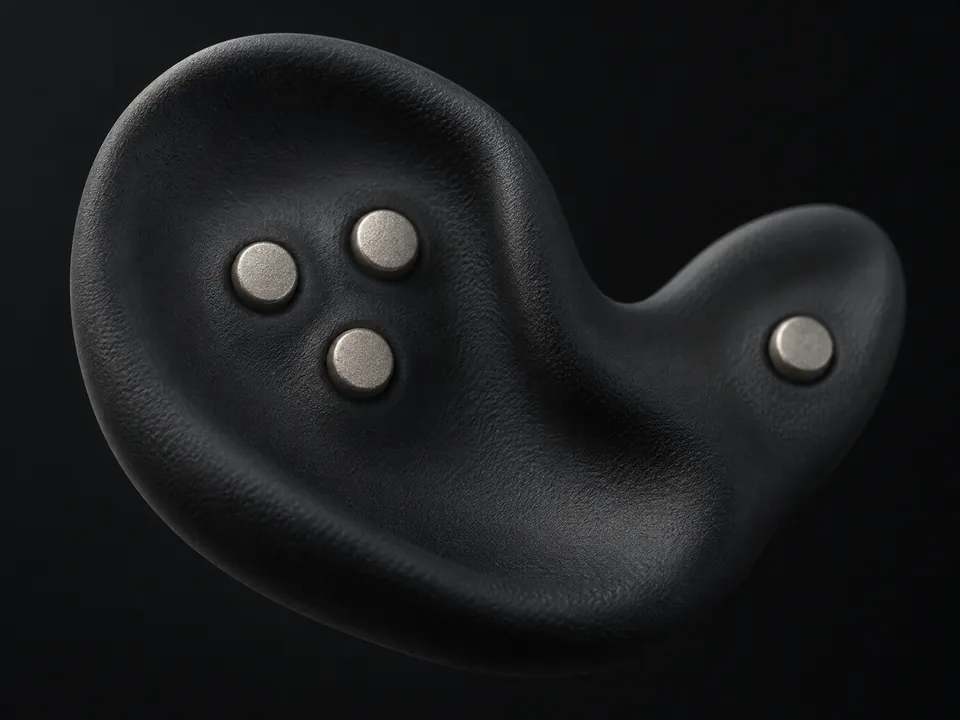
Behind each ear, three electrodes about 7 mm apart, in a shallow zigzag, sit on the skin.
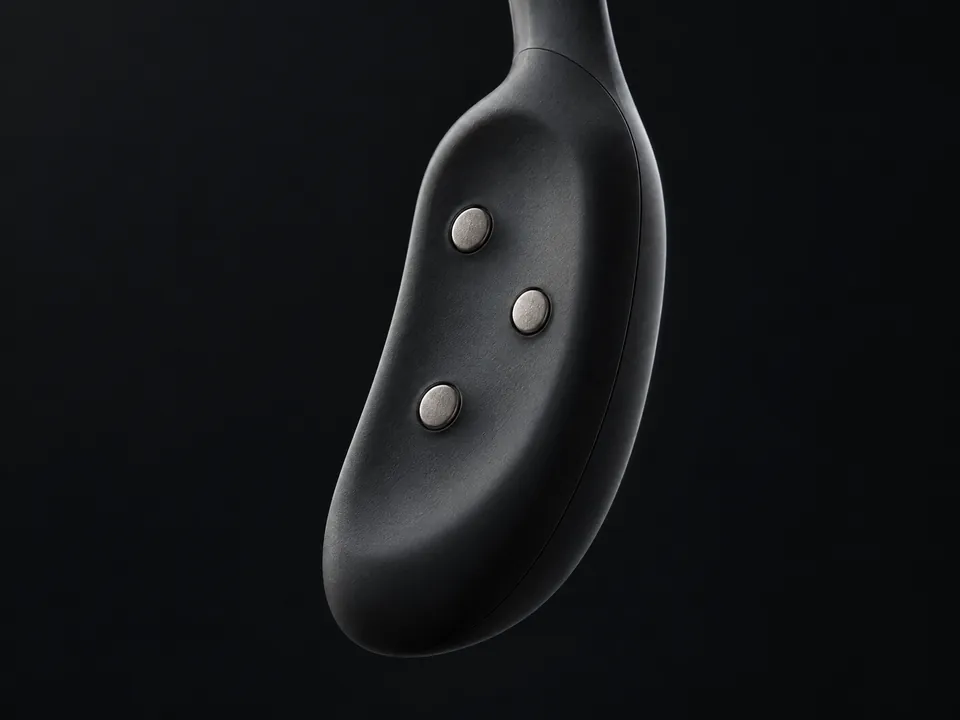
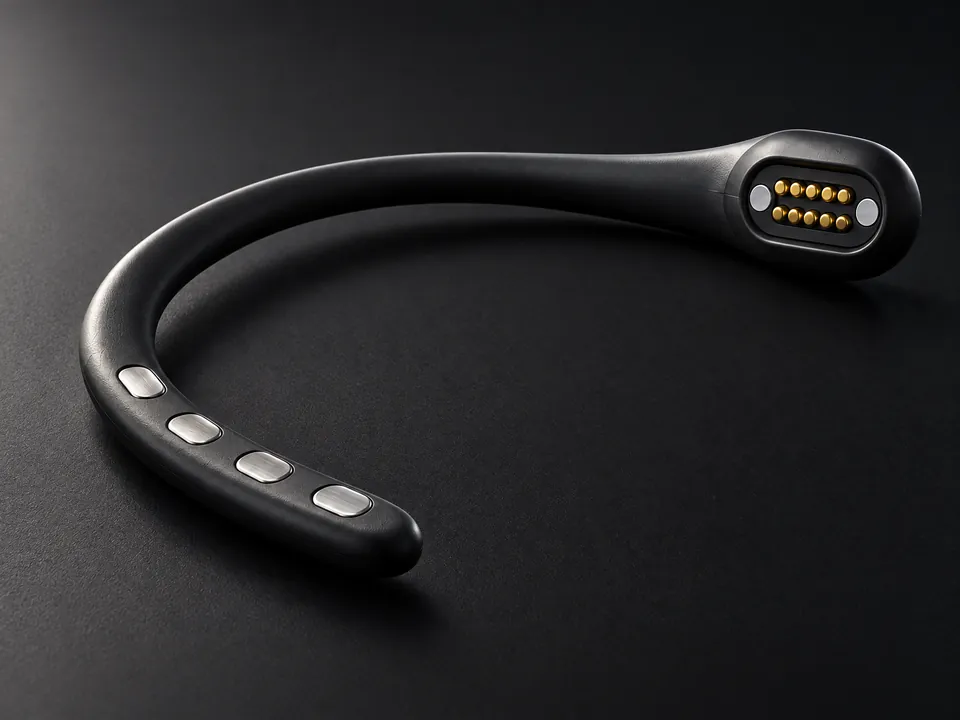
A boom you bend by hand attaches to either earbud and follows the jaw. Four electrodes, 12 mm apart near its tip, face the skin under the jaw. Whether this placement works is what the first study will test.
Modes
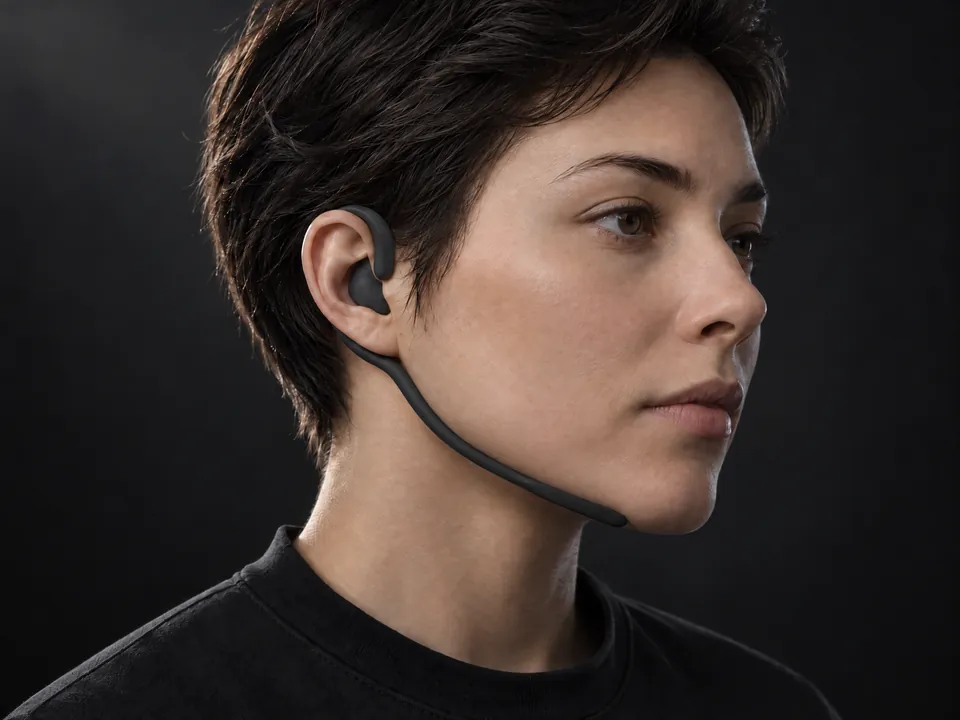
Attach the boom to mouth commands without making a sound.Concept render
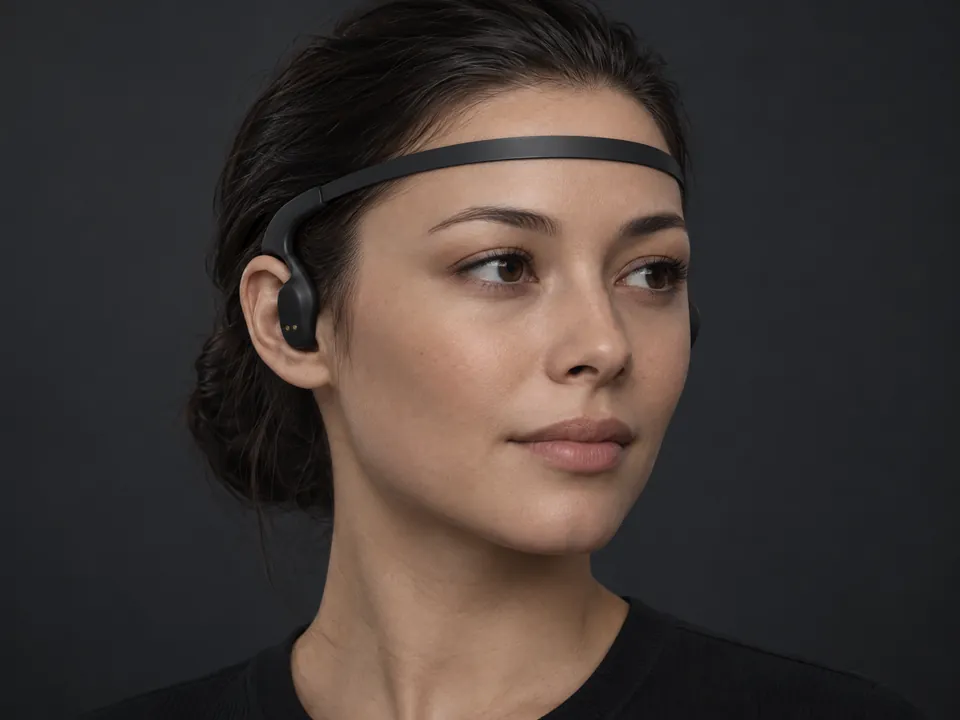
Swap to the band, with four electrodes on the forehead, for focus indication. A wellness feature, not a medical one.Concept render
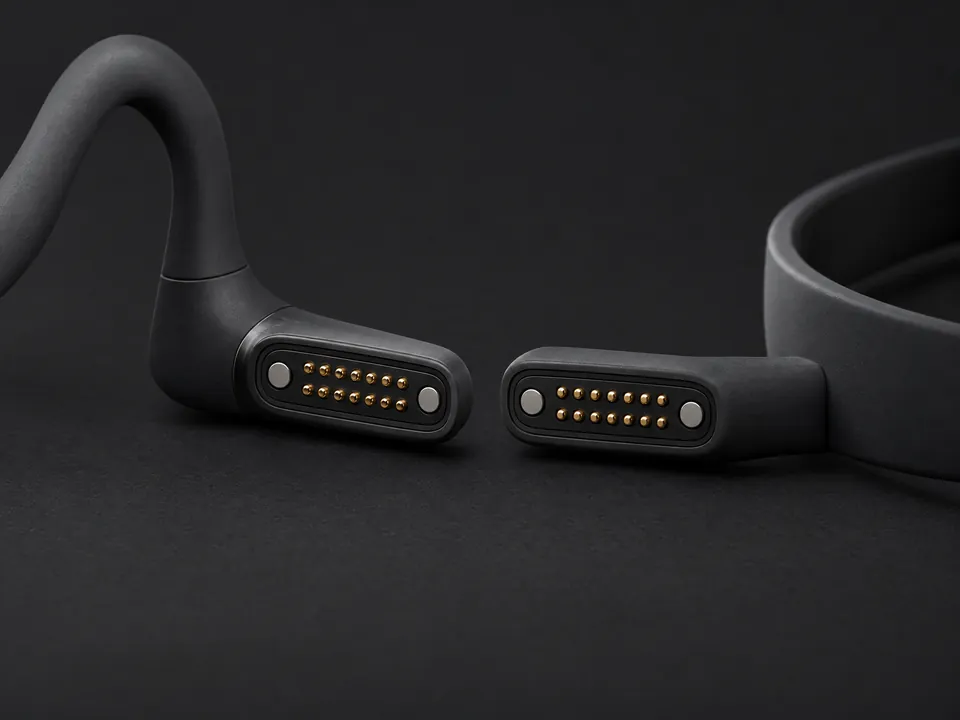
Both earbuds carry the same magnetic dock. The boom clips to either one; the band connects to both. Boom and band are never worn together.Concept render
Privacy · design intent, not yet built
A double jaw clench opens a three-second window. A silently mouthed passphrase confirms it. Anything else stays locked.
While locked, the radio carries no signal data at all. Not encrypted data — none.
A light on the earbuds stays on while decoding, so people nearby can tell. Decoding closes after 60 seconds, or the moment you take an earbud out.
Concept specifications · subject to change
Family
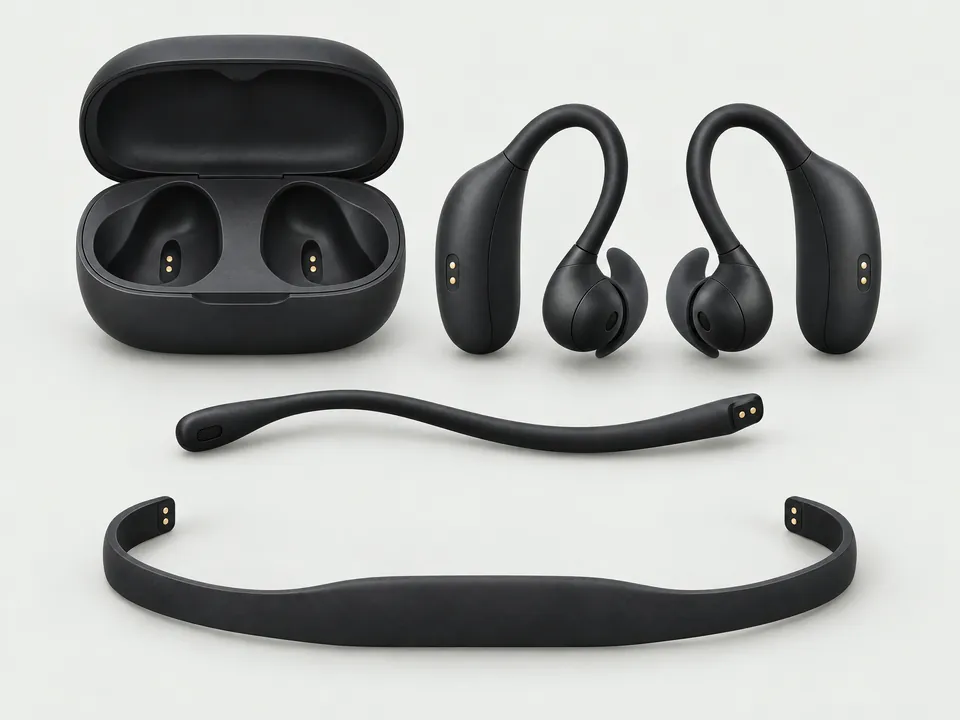
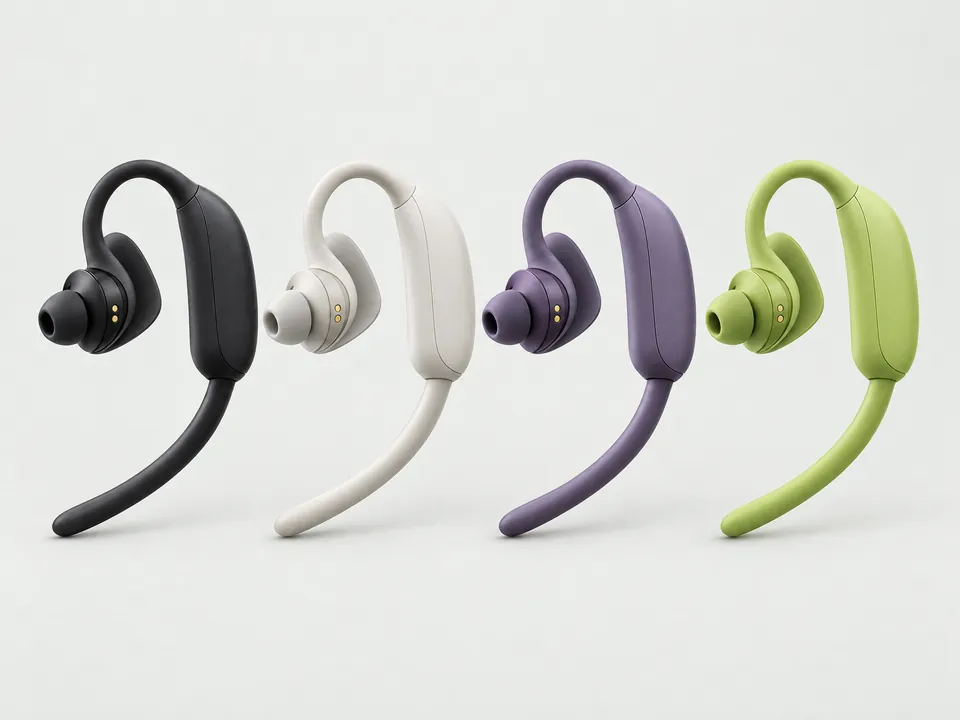
All images are AI-generated concept renders, not photographs. Electrode positions have not yet been validated on people.
CYMBA C1-S is a concept in development. It does not decode inner speech or thoughts. Silent speech input needs enrollment and works only when you really articulate, silently. State indications are wellness features, not diagnoses. Not a medical device.